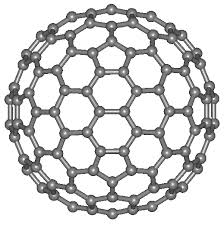
Its other great tradition is water. Shungite has been used for purification for centuries and is still widely used today as a natural filtering material. The most famous chapter in its history involves Tsar Peter the Great, who founded Russia’s first spa resort at the mineral springs of Karelia and attributed the recovery of his soldiers to water filtered through shungite. Long before anyone could explain why, people simply noticed how they felt in its presence: clearer, calmer, more grounded. That is also the spirit in which we produce and use it.
In Russia, it has long been affectionately known as the ‘stone of life’, and one understands why this reputation has taken hold.
In Russia, too, there is a vibrant alternative health scene in which shungite is held in high regard. People cut it into small discs that can be stuck onto mobile phones as radiation protection. It is also popularly fashioned into pyramids, spheres and other shapes, or placed as a raw stone in water filters to energise the water. I heard that in Russia, paint is also mixed with shungite powder to protect houses from electromagnetic radiation.
It is precisely those fullerenes that make shungite so interesting to chemists that are now being studied as some of the most fascinating antioxidant structures we know.
It also helps to imagine where it comes from. Karelia is a vast, tranquil landscape of pine forests and mirror-smooth lakes, with Lake Onega at its heart. The stone was formed there in shallow primeval seas and lay undisturbed for two billion years before we even thought of carrying a piece of it in our pockets.
The egg that started it all
We were on an 11-day cruise from Moscow to St Petersburg, travelling across rivers, lakes and canals with many interesting shore excursions. Naturally, we ‘submerged’ around 300 orgonite pieces on this journey, thereby strengthening a positive energetic connection between Moscow and St Petersburg.
En route, on the island of Kizhi in the far north, I came across an egg carved from pure shungite in a lovely shop in the local museum village. I couldn’t put it down. It had this tingling, vibrant quality, a pulsating energy that felt to me just like orgonite. I carried it with me for the rest of the trip and kept returning to it, turning it in my hand.
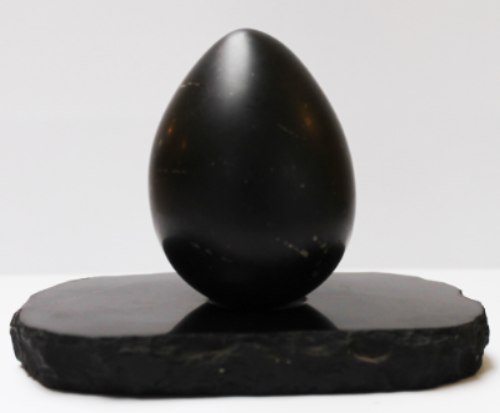
The original egg made of pure shungite, brought back from the island of Kischi in Karelia – the piece with which it all began.
So this egg is the inspiration for our entire silver and shungite collection. Once I’d noticed it, the egg seemed to be staring at me from everywhere in Russia:
Eggs wherever you look
The egg is one of the oldest symbols we have. Cultures all over the world have drawn upon it to explain the origin of all things: the Orphic egg of the ancient Greeks, the egg from which Pangu emerges in Chinese mythology, the World Egg of the Zoroastrian and Slavic traditions. It is the seed of all life.
Karelia, formerly part of Finland, is also linked to the Finnish creation myth from the Kalevala collection of legends, which describes how the world emerged from the egg of a diving duck.
And last but not least: let’s not forget the Easter egg!

The Orgonise Africa team at St Basil’s Cathedral, Moscow, 2016.
Written into the the roofs
Standing, as we are, on Red Square in front of St Basil’s Cathedral, the shape seems to rise up around you. These famous domes are often referred to as onion domes, and it is said that they are shaped like the flame of a candle rising towards the sky, the whole cathedral like a bonfire reaching for the heavens. However, if you look again, you can also see the egg within them, crowned and tapering, raised up on its slender tower.
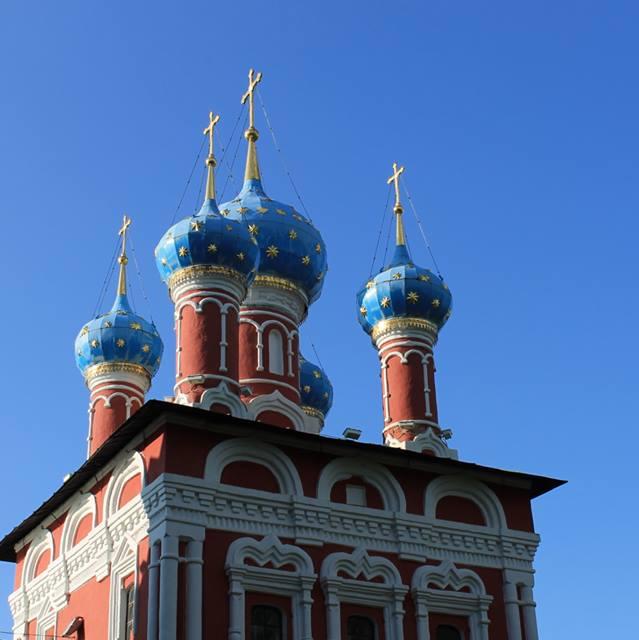
The blue domes of a Russian church, studded with golden stars – an egg-shaped structure, crowned and soaring towards the sky.
Blue domes studded with golden stars, such as those pictured above, traditionally crown churches dedicated to the Mother of God. And within this single, harmonious outline of the egg lie two further sacred forms with which we constantly work in orgonite production: the sphere and the pyramid. In a sense, the egg is all of these at once.
Russian churches are much more places of healing and direct connection to the divine. Unlike in Gothic cathedrals, the focus is not on the impressive, skyward-reaching space, but on the individual connection to God. Russian scientists have found that the space beneath these egg-shaped domes is remarkably free of viruses and pathogens of all kinds.
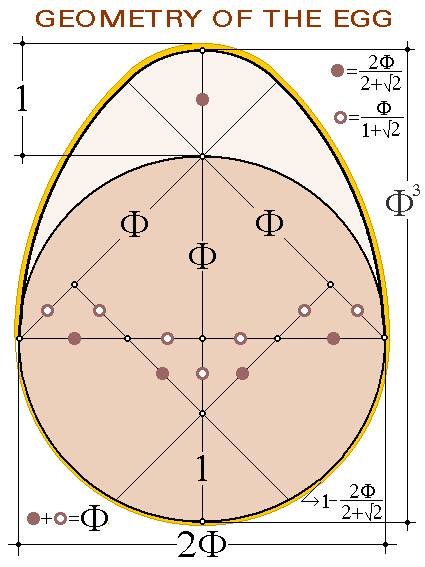
The geometry of the egg – sphere and pyramid, united in a single form.
Why silver?
If shungite is ancient and grounding, then silver is its natural counterpart. Since the times of ancient Greece and Egypt, people have valued silver for its purifying properties; they used it to store water and food to keep them fresh, and even today it is still used in conventional medicine as a component in sterilising wound dressings. In the language of energy, silver is associated with the moon and the reflective, receptive side of things: like the moon, it reflects and gently deflects unwanted energy away from the wearer.
There is also a practical, craft-related reason. Silver has the wonderful property of amplifying and conveying the qualities of the stones with which we combine it – exactly what one would wish for from an orgonite piece that already combines several gemstones. Combining the calm, moon-like reflectivity of silver with the deep, grounding pull of shungite felt less like a decision and more like bringing two old friends together. This connection gave the ‘Silver & Shungite Collection’ its name.
A few words about orgonite
If you’re not yet familiar with our work, here’s the short version: orgonite is a mixture of resin, metal and quartz, composed in such a way that the finished piece constantly interacts with the energy of its surroundings, rather than lying idle on a shelf.
Even on its own, this mixture is wonderful in everyday life. However, what we have discovered over many years is that adding natural stones to this mixture enhances and enriches the effect, with each stone bringing its own character to the mix. A piece of shungite orgonite thus combines two positive qualities: the ancient, grounding power of the stone, supported and amplified by the orgonite surrounding it.
That is why our shungite egg is not simply a polished stone. It is cast in two stages around a five-pointed quartz crystal core, weighted with fine metal, then encased in a generous layer of shungite and finished by hand. The crystal at the centre is the engine; the shungite is its soul.
The stones that accompany the shungite
Shungite is the leader, but it does not work alone. We incorporate a small group of companion stones into our pieces, each selected for the properties for which it has been valued in crystal healing for generations. None of this is medicine, and I would never present it as such; instead, consider it the character of each stone, the mood it brings to the mix.
Black tourmaline – long worn as a protective and grounding stone, traditionally kept close by to ward off unwanted energy.
Smoky quartz – a stabilising, earthy stone associated with resilience and the quiet release of tension.
Rose quartz – the gentle one: the stone of warmth, kindness and unconditional love, which softens the whole.
Amethyst – a calm, contemplative stone long associated with clarity, peace and a certain spiritual elevation.
Brought together and held by orgonite, they create a piece that feels balanced rather than one-sided: grounded and protective, yet at the same time warm and soothing.
The Silver & Shungite Collection
Each of the pieces listed below is handcrafted in our workshop, and every single one is something we live with ourselves. Here is the collection, and a word on where each piece usually finds its place.
-
Silver & Shungite Pyramid – our piece for the whole home. One of these in the living room or studio works quietly in the background, providing grounding and protection from the everyday EMF exposure of a busy household. It is the piece I recommend first to anyone who wants to start with a single, central piece.
-
Silver & Shungite Buster – small, but an absolute favourite, and for a lovely reason. We’ve received wonderful feedback from people who keep one on their bedside table in the bedroom and notice a difference in their rest. If you’d most like to feel a change whilst sleeping, start here.
-
Shungite Egg – the centrepiece of the collection and simply beautiful to hold. It is formed in two stages around a five-pointed quartz crystal core, then coated with a generous layer of shungite and finished with a soft, matt sheen that feels just like the real stone in the palm of your hand. It is made to be held and is a wonderful companion for meditation. This is the direct descendant of that first egg from the island of Kischi.
-
-
Silver & Shungite Pendant – I’ll be honest: this is my personal favourite. I wear mine every day and every night, even in the shower, and I really miss it the moment I take it off. If you want to take a little piece of it with you wherever you go, this is the one for you.
-
Silver & Shungite Set – all four pieces together, saving you around 15% compared to buying them individually. It’s the easiest way to take the whole collection home in one go, and a generous gift if someone you love is curious about one of these pieces.
Living with your piece
People often ask how best to use these, and the honest answer is: there’s no wrong way.
Nevertheless, a few small habits seem to help. A pyramid might like a central spot in a room you use often, or near the routers and screens that fill a modern home. The Buster feels most at home on a bedside table. You can simply take the pendant with you wherever you go. And the egg is made to be held in your hand: hold it in your cupped hands for a few quiet minutes, let its weight soothe you, and you’ve built a little portable break into your day. I hold it in my hand every day whilst meditating.
As for care, thanks to the self-regenerating properties of orgonite, you don’t need to do anything. We like to place the pure stones in sunlight or moonlight for a few hours, or simply hold them under running water whilst setting a clear intention for them.
More important than any ritual is that you actually live with it: keep it where you can see and touch it, and let it become part of the atmosphere of your home.
As always, these are pieces that we make and use ourselves, and I would never put my name to something I didn’t believe in. If one of these finds its way to you, write back and tell me how you’re getting on with it. I read every reply, and stories like yours are half the reason why we do this.